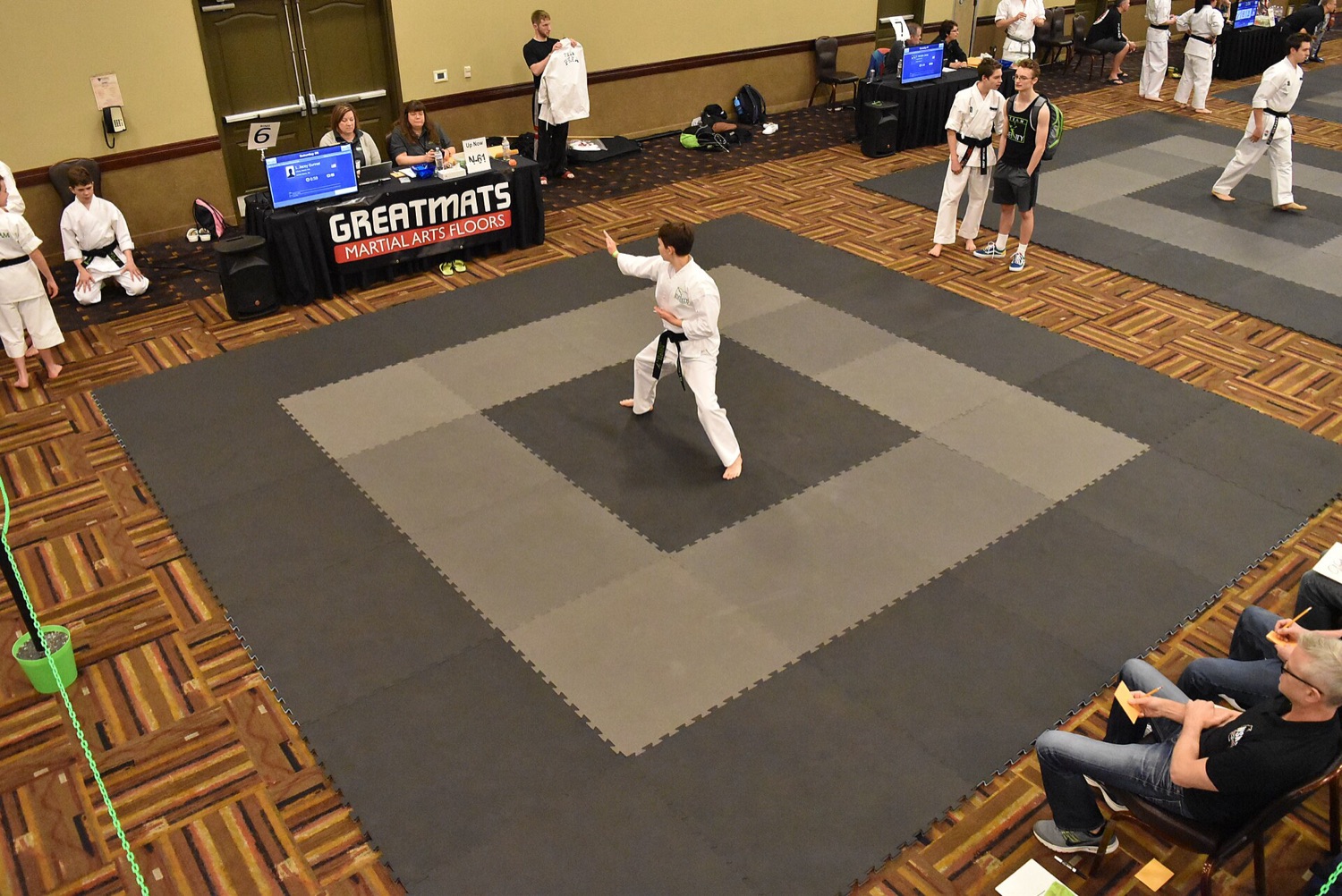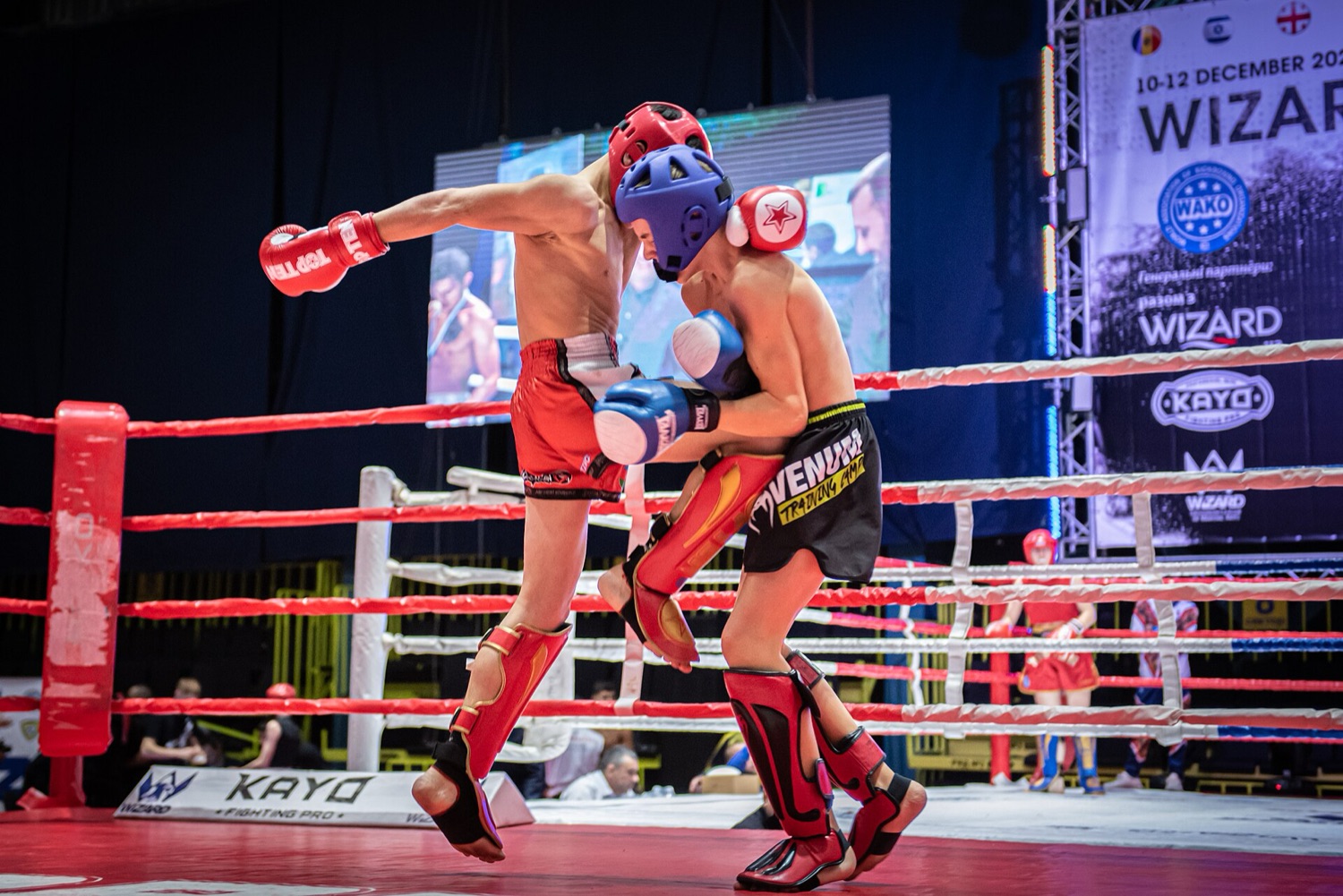
Karate is a striking art built on punches, kicks, knee and elbow strikes and open-hand blocks. It is also one of the easiest martial arts to start: you need no partner on day one, very little equipment and no previous fitness. This guide explains what you are signing up for.
Where karate comes from
Karate grew up on Okinawa, then part of the Ryukyu Kingdom, where local fighting methods mixed with Chinese boxing brought by traders and envoys. In the early twentieth century Okinawan teachers such as Anko Itosu simplified it for schoolchildren, and in 1922 Gichin Funakoshi demonstrated it in Tokyo. Funakoshi stayed on the Japanese mainland, and the style his students built became known as Shotokan, after his pen name. During the 1930s the written name changed from characters meaning "Chinese hand" to the ones used today, meaning "empty hand".
Today the best-known styles are Shotokan (long, deep stances and strong linear techniques), Goju-ryu (close-range work and breathing), Shito-ryu (a very large kata syllabus), Wado-ryu (evasion and body shifting) and Kyokushin, a full-contact style founded by Masutatsu Oyama. A good club in any of them will teach you the same fundamentals.
The three pillars: kihon, kata and kumite
| Pillar | What it is | What it builds |
|---|---|---|
| Kihon | Basics: stances, blocks, punches and kicks practised in lines | Technique, balance, power |
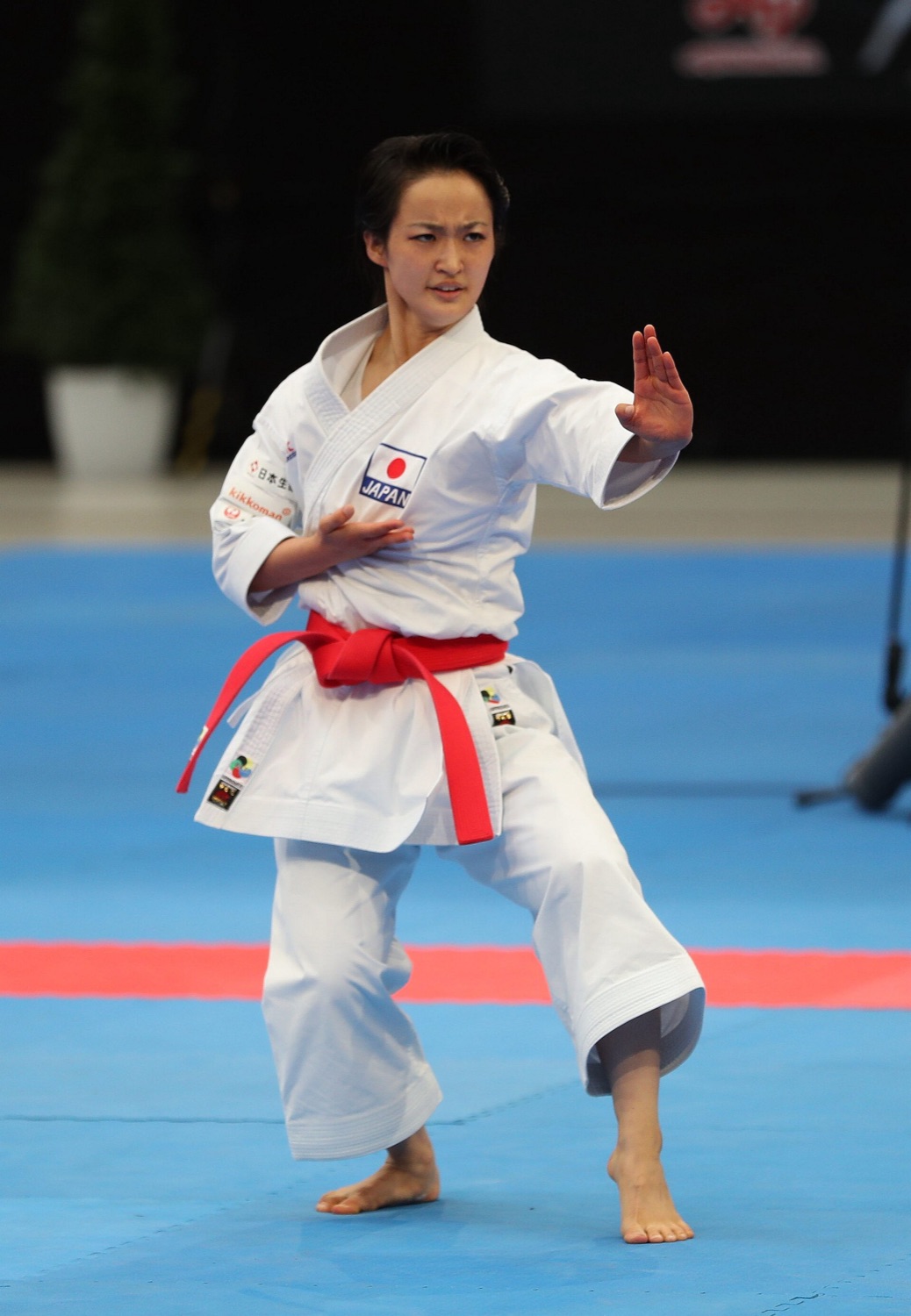
| Kata | Set patterns of moves against imaginary opponents | Memory, flow, precision, focus |
| Kumite | Sparring, from pre-arranged drills to free fighting | Timing, distance, reactions, courage |
Most classes touch all three. Beginners spend more time on kihon; kumite starts with controlled, pre-arranged exchanges and grows into light sparring with gloves and mouthguards. Our beginner kata guide walks through the first two patterns most Shotokan students learn, and the point sparring drills show how kumite is trained.
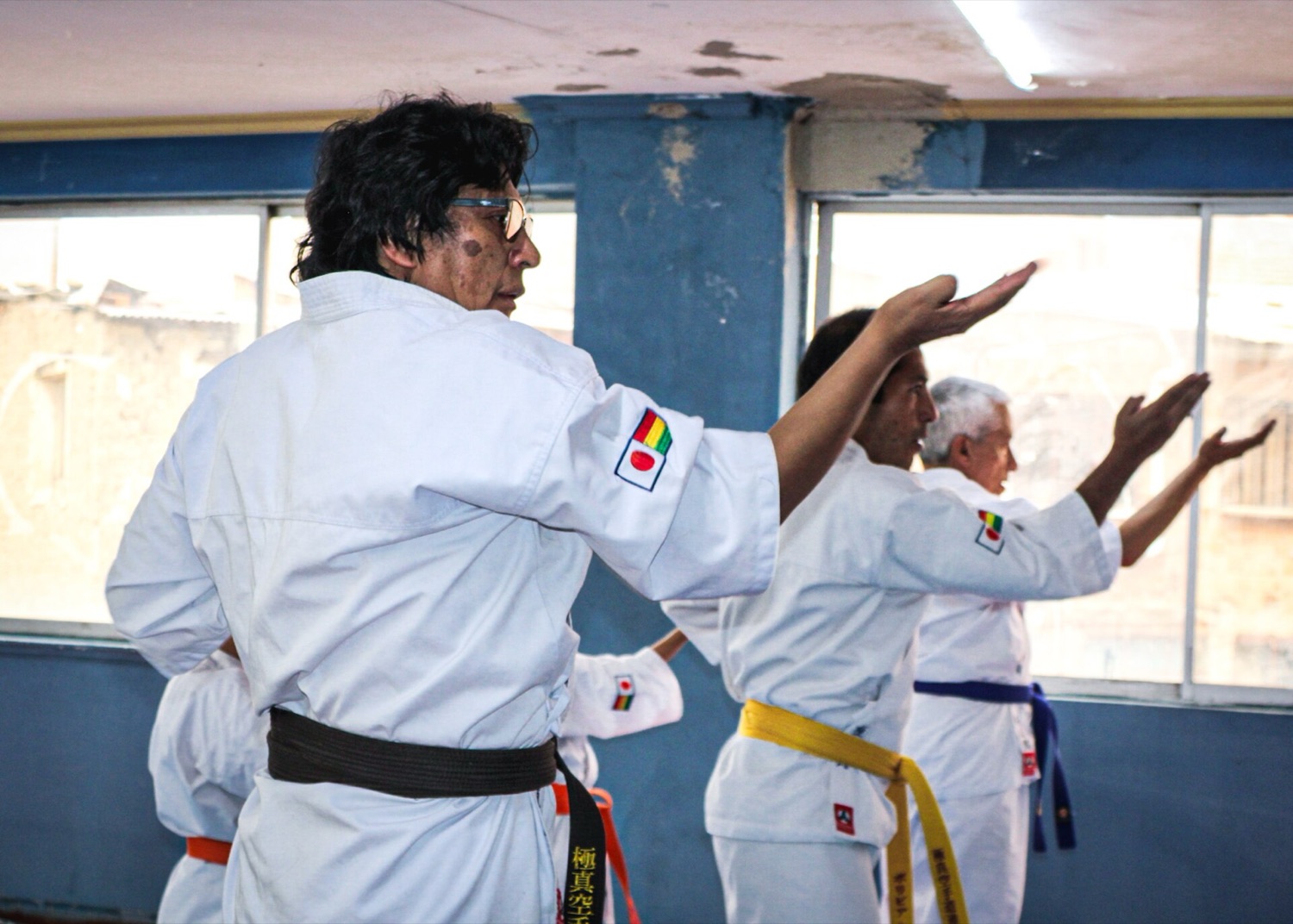
How karate belts work
Karate borrowed its coloured belts from judo. Students start at the lowest kyu grade and count down towards 1st kyu, then move to dan grades, which are the black belt levels. The colour order differs from club to club, but white, yellow, orange, green, blue, purple and brown appear in most systems. With two or three classes a week, many adults reach black belt in around four to six years, though a good instructor will care more about your technique than your timetable.
Children's programmes often add stripes or tags between belts so that young students get a visible reward every few months. We explain how that works by age in our guide to kids' martial arts by age group.
What your first class looks like
- Bow in. Classes start and finish with a short bow. It is a sign of respect, not a religious ritual.
- Warm-up. Joint rotations, light jogging, push-ups and stretching.
- Basics in lines. Front stance, lower block, lunge punch and front kick, repeated on the count.
- Partner work. Simple drills such as blocking a slow punch, always with control.
- Cool-down. Stretching, then a final bow.
Wear a T-shirt and track pants for the first few sessions. You will need a karate gi once you commit, and gloves, a mouthguard and shin pads when sparring starts.
Karate as a sport
Sport karate under World Karate Federation rules has two events. In kata, judges score the quality and power of a performed pattern. In kumite, fighters score with controlled techniques: a punch is worth one point (yuko), a kick to the body two (waza-ari), and a head kick or a takedown followed by a scoring strike three (ippon). Karate made its Olympic debut at the Tokyo Games, held in 2021, but was not kept for Paris 2024.
Why people stay with it
- You learn how to defend yourself and how to avoid trouble in the first place.
- Confidence and self-discipline grow with every grading.
- Training reduces stress and sharpens focus.
- It is excellent all-round fitness and helps with weight management.
- Belts give you clear goals and a habit of reaching them.
- The dojo is one of the friendliest places to make new friends.
From the dojo to the cage
Karate rarely appears on an odds board itself, but karate fighters do. Former UFC light heavyweight champion Lyoto Machida built his career on a Shotokan base, and Stephen Thompson brought a kickboxing and karate background to the welterweight division. Their side-on stances, blitzing entries and quick exits make fights hard to read for casual viewers. If you understand distance from your own kumite, you read those matchups better, and our guide to reading a fighter's style before betting shows how fans turn that knowledge into sharper fight-night picks.