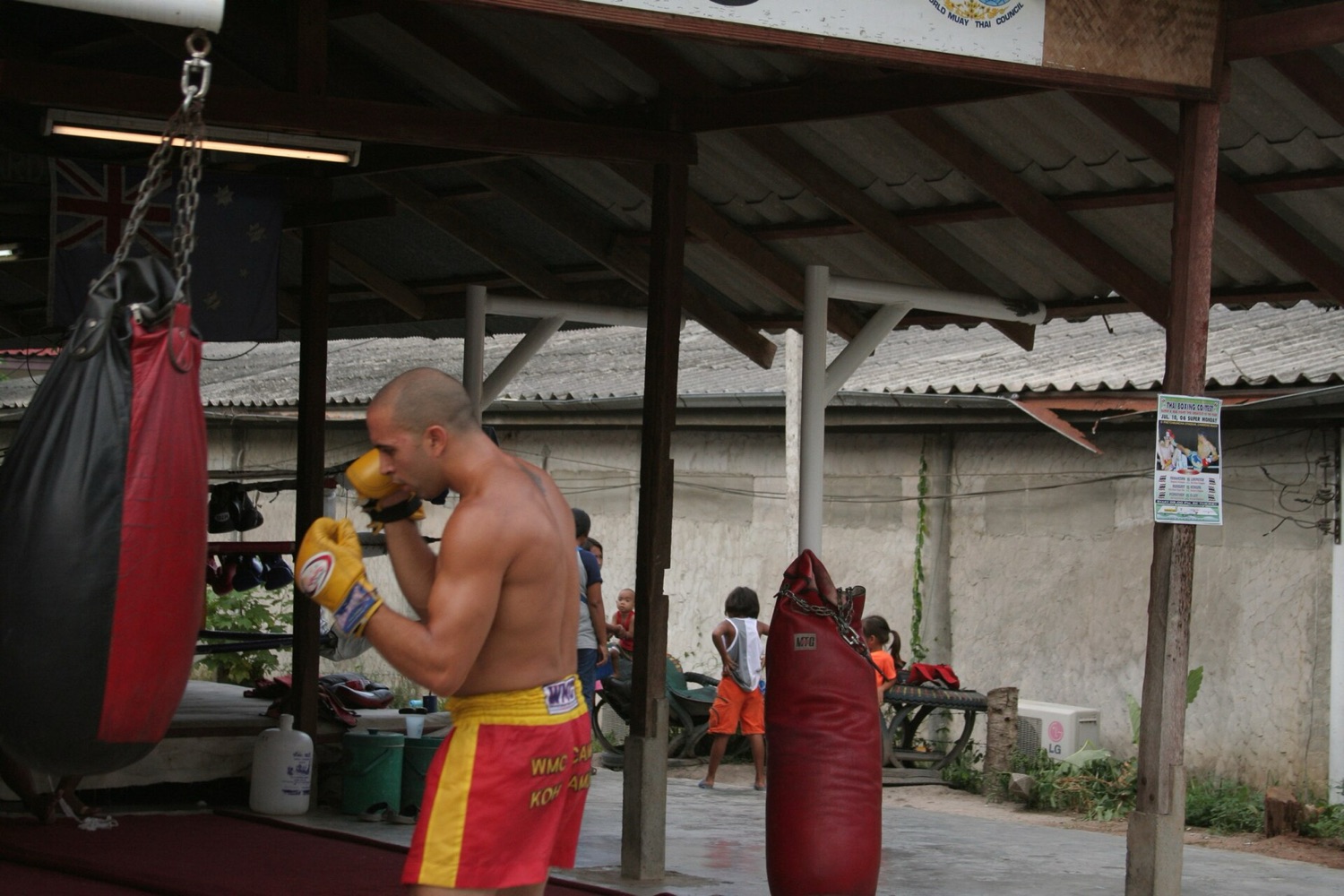
High kicks look like a gift of nature, but most people who throw them trained their flexibility for years. With a sensible routine almost anyone can kick higher, and the same routine lowers the risk of strains.
The muscles that limit your kicks
| Muscle group | Limits | Key stretch |
|---|---|---|
| Hamstrings | Front kick and axe kick height | Seated forward fold, standing hamstring stretch |
| Adductors (inner thigh) | Side kick and roundhouse | Butterfly, side lunge, straddle |
| Hip flexors | Rear-leg kicks and stance depth | Kneeling lunge stretch |
| Glutes and hip rotators | Turning the hip over on roundhouse | Pigeon or figure-four stretch |
Before training: dynamic only
Long static holds just before explosive kicking can briefly reduce power. Instead, warm up with movement:
- Jog or skip for 3–5 minutes.
- Leg swings front to back, 10 each leg, getting gradually higher.
- Side leg swings, 10 each leg.
- Walking lunges with a twist, 10 each side.
- Hip circles and slow, controlled kicks to rising heights.
After training: static and long
When muscles are warm, hold each stretch for 30–60 seconds and breathe slowly. Ease in until you feel a strong but comfortable pull, never sharp pain. Two or three rounds of a short routine after every session will do more than one heroic session a month.
- Kneeling hip flexor stretch, each side.
- Seated forward fold, back long.
- Butterfly stretch, pressing knees gently down.
- Side lunge, each side.
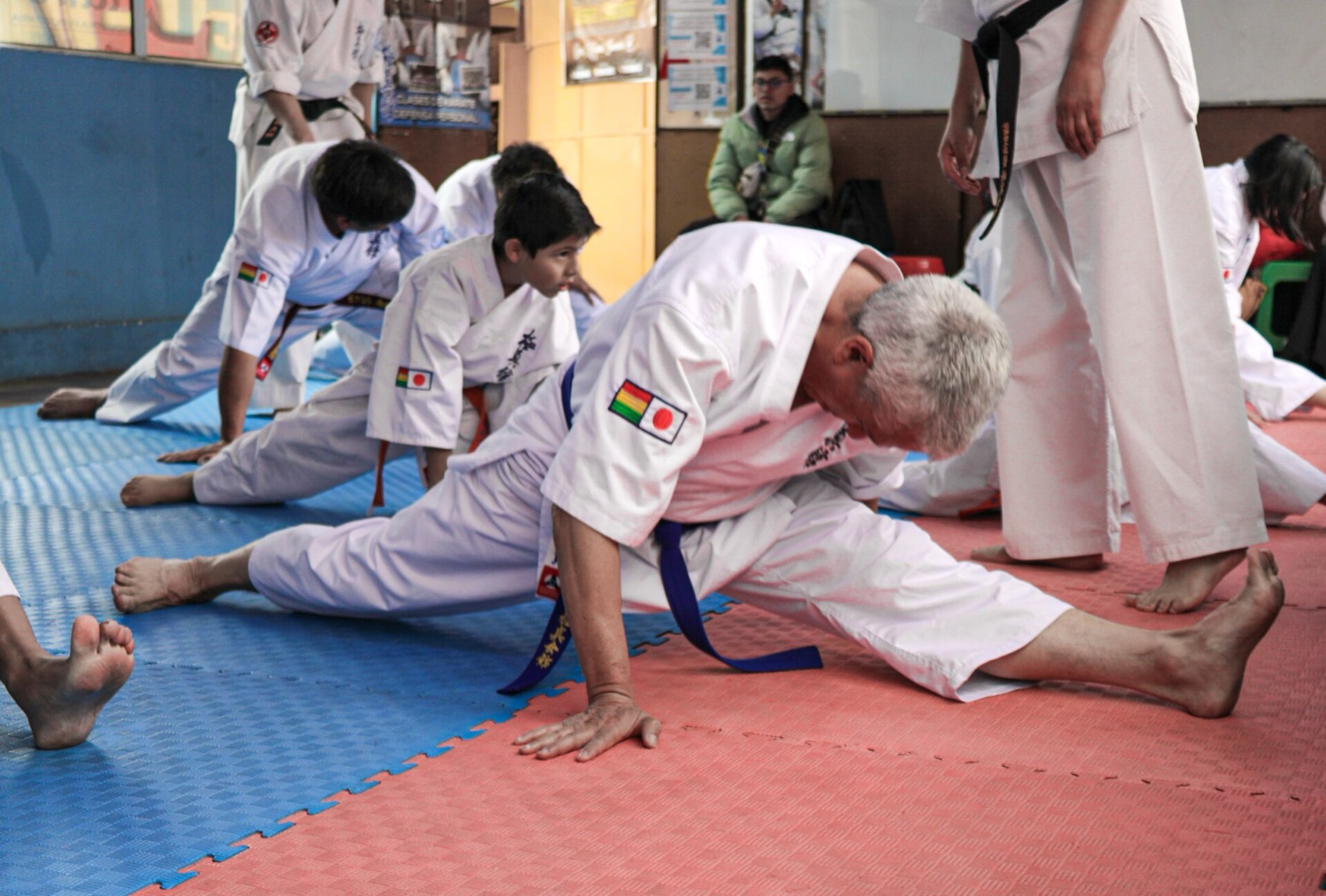
- Front split progression, supported by blocks or chairs.
- Straddle stretch, leaning forward from the hips.
Contract-relax stretching
Also called PNF, this technique alternates a gentle muscle contraction with a deeper stretch. Hold a stretch, press against the stretch for about five seconds without moving, relax, then ease a little deeper. Repeat three times. It often produces quick gains but should be done carefully and not every day.
How long until the splits?
It depends on age, genetics and consistency. Some flexible beginners get close in a few months; many adults need a year or more, and some never reach a full side split because of their hip structure. That is fine: kicking to head height needs much less than a full split.
Common mistakes
- Bouncing into a stretch.
- Stretching cold muscles hard.
- Rounding the back in forward folds; keep the spine long and hinge at the hips.
- Comparing yourself to others instead of your own progress.
Put the routine to work with our point sparring drills and the two-week home plan, which includes stretch-focused cool-downs.