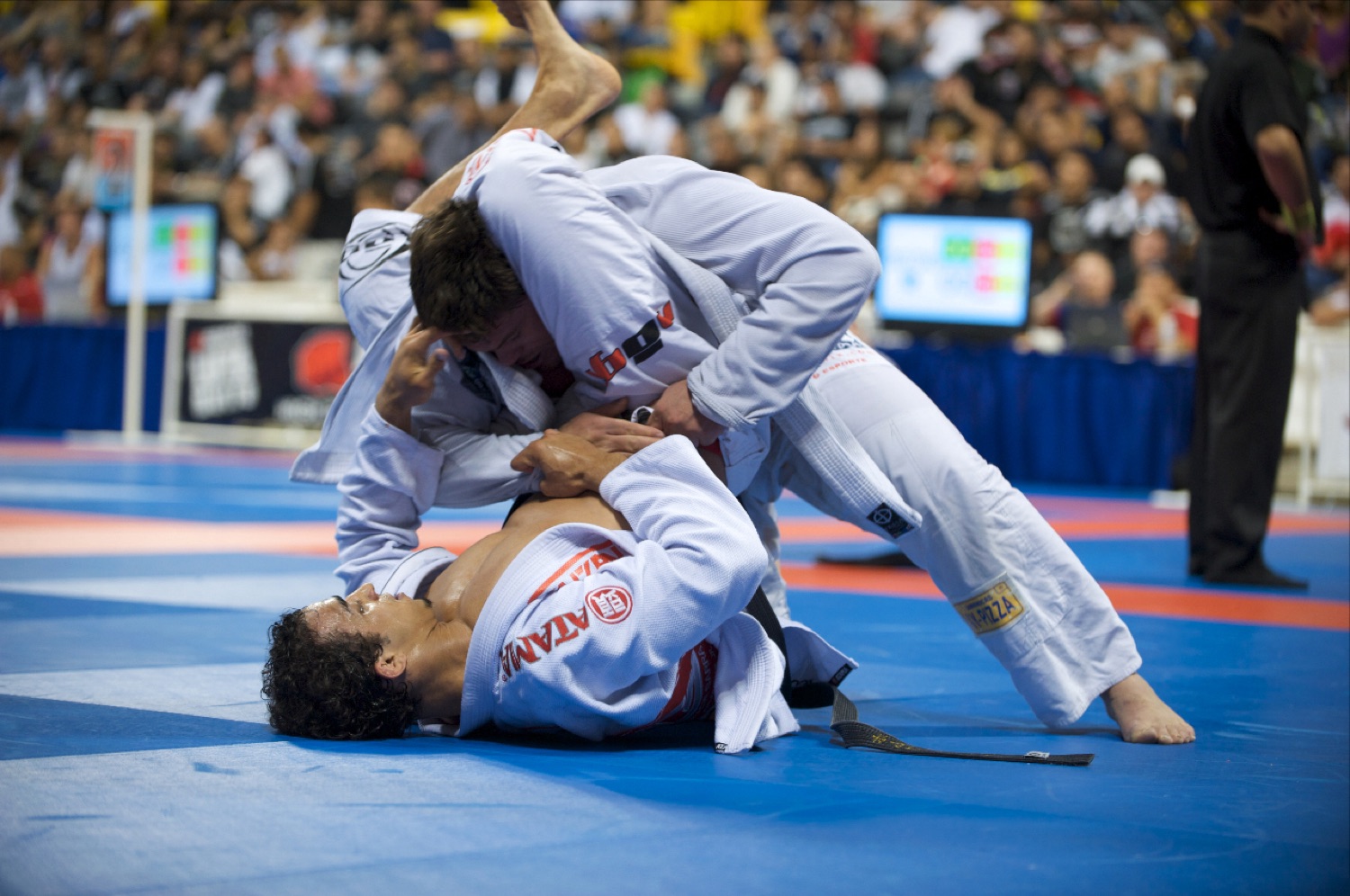
Brazilian jiu-jitsu, or BJJ, is a grappling art. There are no punches or kicks in training. Instead you learn to take an opponent down, hold a dominant position and finish with a choke or joint lock, all while your partner does the same to you. It is often called physical chess, and it is a favourite of people who never thought they would enjoy a martial art.
A short history
Judo and jiu-jitsu expert Mitsuyo Maeda arrived in Brazil in 1914 and settled in Belém, where he taught Carlos Gracie and others. The Gracie family went on to refine what they learned, with Hélio Gracie in particular adapting techniques so that a smaller person could rely on leverage and timing. The art reached a worldwide audience in 1993, when Royce Gracie won the first UFC tournament against bigger strikers. Since then, almost every mixed martial artist has trained BJJ.
The positional ladder
BJJ is built on a simple idea: control first, then submit. Positions are ranked by how much control they give.
| Position | Who is winning | Beginner goal |
|---|---|---|
| Guard | Bottom player controls with the legs | Learn to keep your guard and sweep |
| Side control | Top player pins across the chest | Escape to guard from bottom; hold from top |
| Mount | Top player sits on the torso | Keep balance on top; bridge and escape below |
| Back control | Attacker behind with hooks in | Defend the neck; on top, seek the choke |
A classic early sequence is to secure mount control, keeping your weight low and your knees tight, then attack with the Americana, a shoulder lock applied by pinning the opponent's bent arm to the mat. It teaches the whole philosophy in two moves: settle the position, then finish.
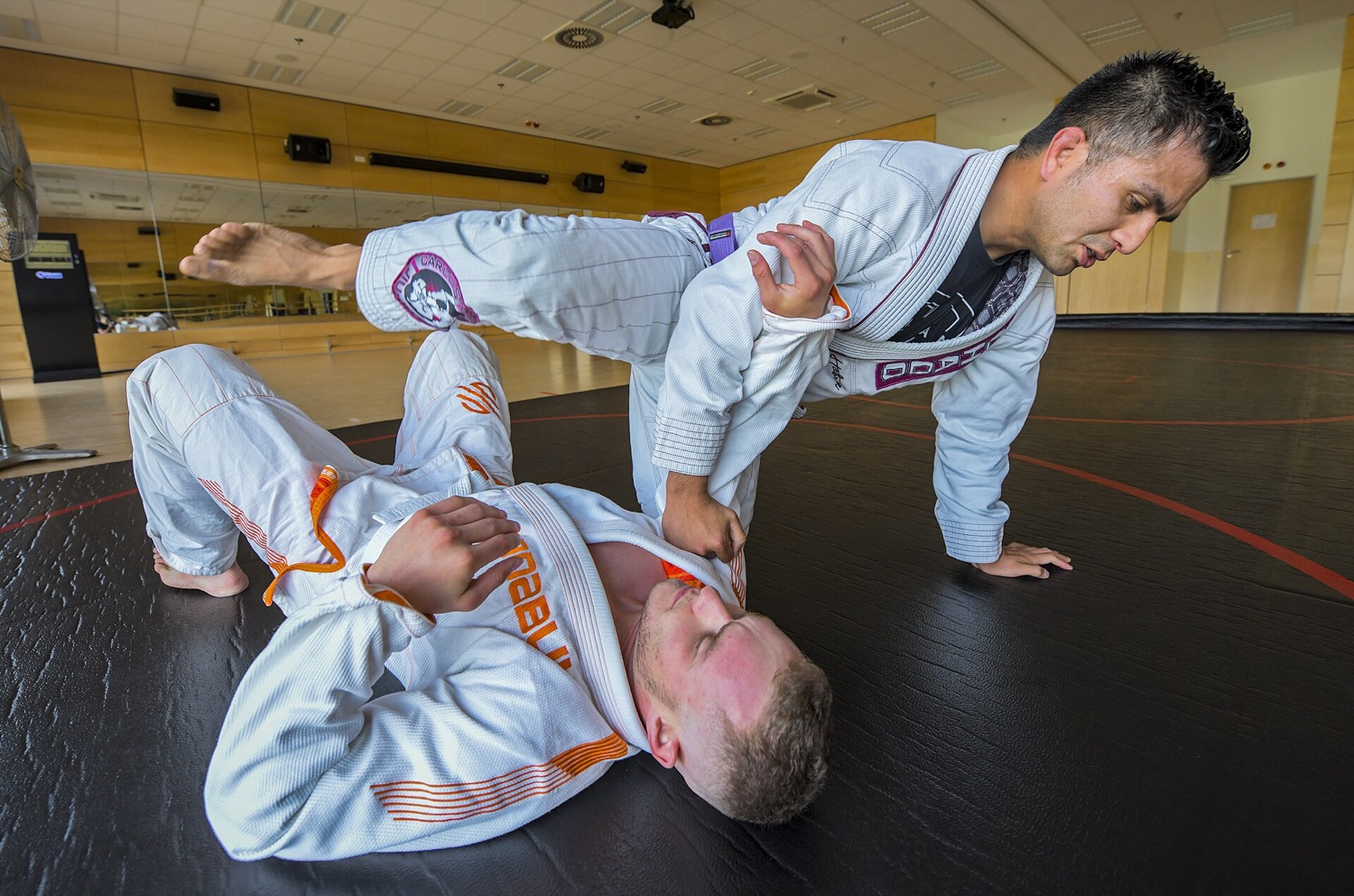
Gi or no-gi?
| Gi | No-gi | |
|---|---|---|
| Clothing | Heavy cotton jacket, trousers and belt | Rash guard and shorts |
| Grips | Collar and sleeve grips allowed | Grips on the body, wrists and neck |
| Pace | Slower, more methodical | Faster and more scrambly |
| Best for | Learning control and patience | MMA and wrestling crossover |
Most academies teach both. Beginners usually progress faster in the gi, because the grips slow the game down enough to understand it.
Belts and time
The adult belts run white, blue, purple, brown and black, with up to four stripes on each belt before black. The International Brazilian Jiu-Jitsu Federation sets minimum ages and minimum times at each level, and a black belt commonly takes a decade or more of consistent training. Children follow their own system with grey, yellow, orange and green belts, which we cover in kids' jiu-jitsu explained.
Surviving your first month
- Tap early. Tapping on your partner or the mat ends the exchange. Nobody keeps score in training.
- Relax and breathe. New students exhaust themselves by squeezing everything. Efficiency comes with time.
- Look after hygiene. Wash your gi after every session, keep nails short and cover cuts. Skin infections spread on mats.
- Roll with experienced partners. Higher belts usually control the pace and keep you safe.
- Train two or three times a week. Consistency beats intensity.
- Fuel properly. Grappling burns a lot of energy; our post-training recovery meals help.
Why size matters less
The art's promise is that a smaller person with correct technique can control a bigger, stronger opponent. It is not magic: weight still matters between people of equal skill. But between a trained and an untrained person, technique wins with remarkable regularity, which is why BJJ is popular in women's self-defence courses.
BJJ on fight night
Submissions decide a large share of MMA fights, and sportsbooks price them separately. A "win by submission" market on a jiu-jitsu specialist can pay several times more than a plain win, because you need both the result and the method to land. Knowing whether a fighter's grappling holds up against a strong wrestler, or whether they can even get the fight to the floor, is exactly what that price asks. Our guide to how UFC and MMA odds work explains method-of-victory betting in detail.