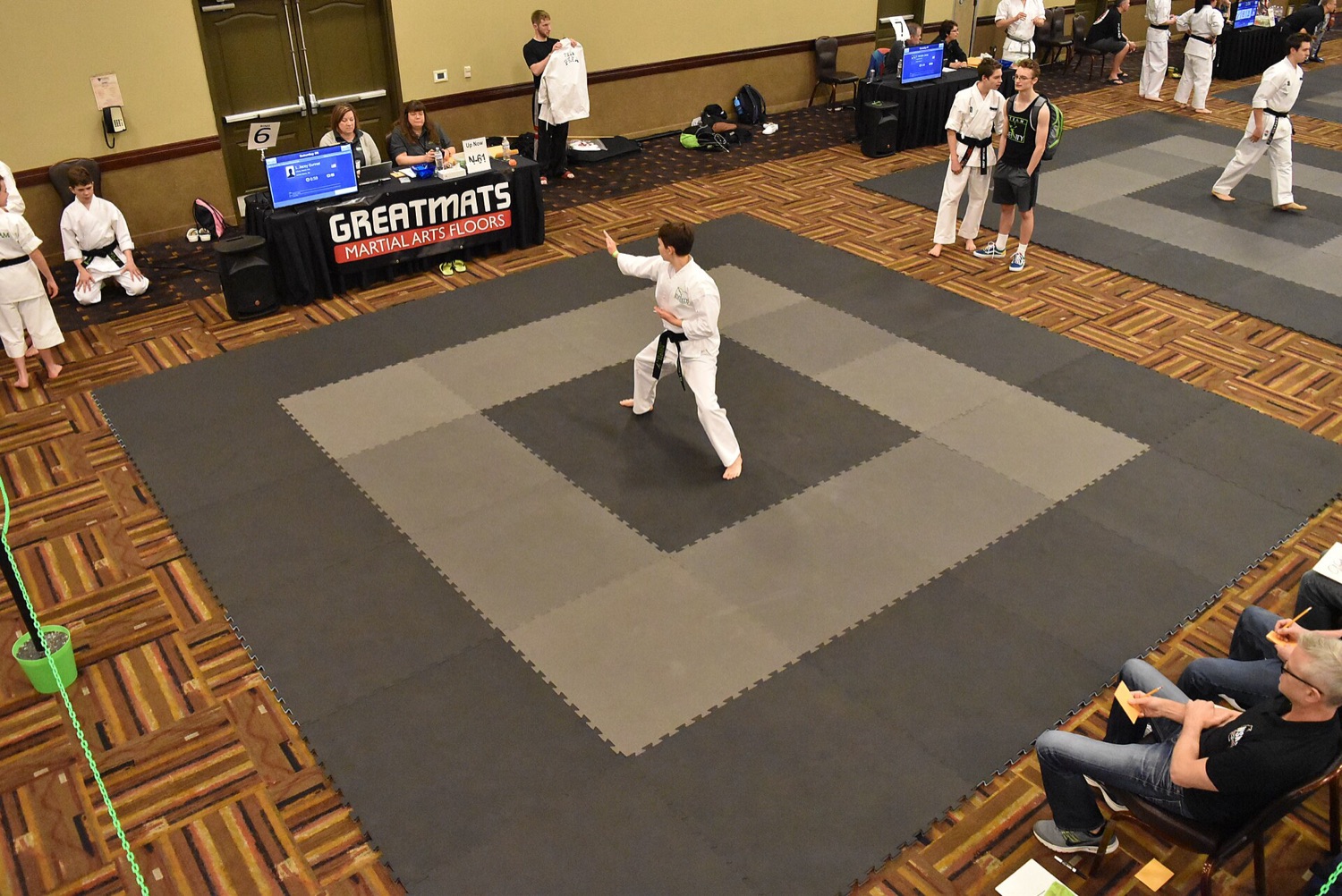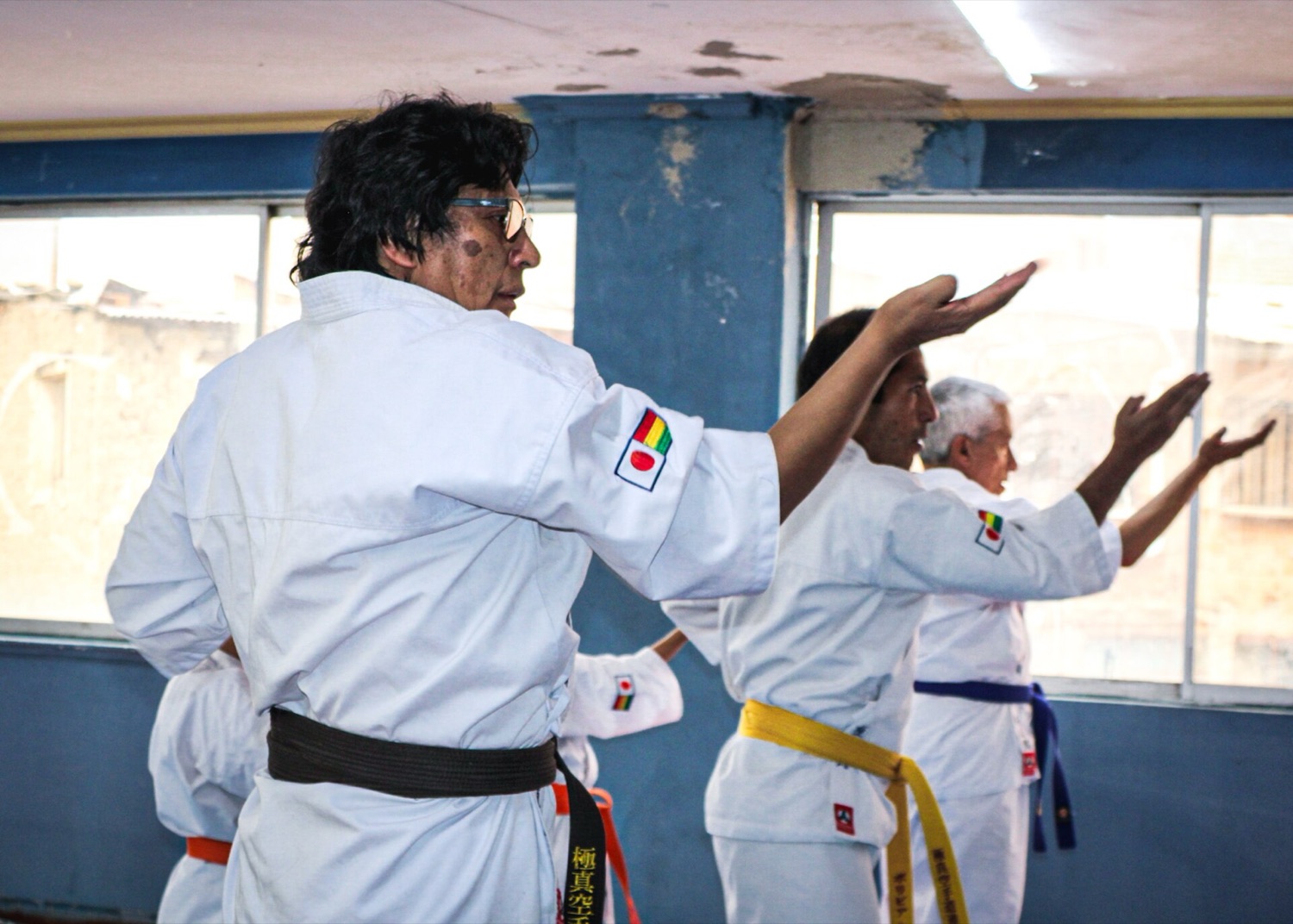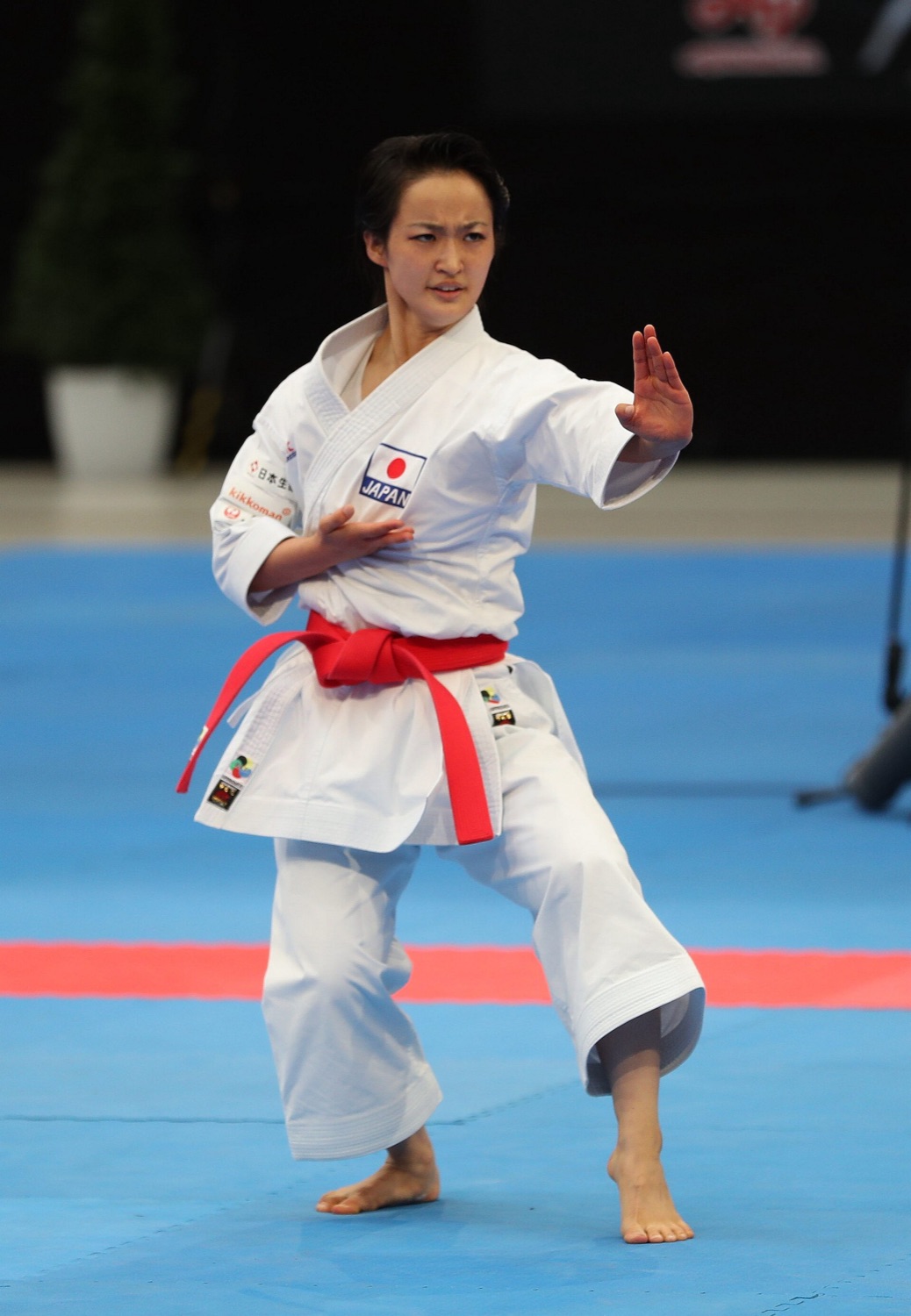
A kata is a set sequence of blocks, strikes and stances performed against imaginary opponents. For many karate students the first two are Taikyoku Shodan and Heian Nidan. Learn them well and every later kata becomes easier.
Why kata matters
Kata is karate's textbook. Each pattern stores techniques, transitions and principles that teachers have passed down for generations. Practising kata builds balance, memory and precise movement, and it is the one part of karate you can practise properly on your own in a small space.
Taikyoku Shodan: the first step
Taikyoku Shodan is a simplified introductory kata created in the Funakoshi family's Shotokan tradition. It uses only two techniques, the lower block (gedan barai) and the stepping punch (oi-zuki), performed in front stance along an I-shaped floor line. There are twenty moves, usually with two kiai, the short shout that marks full commitment.
- Turn left into front stance with a lower block, step forward with a stepping punch.
- Turn 180 degrees, block, punch.
- Turn to face up the centre line, block, then three stepping punches forward, the last with a kiai.
- Repeat the side pattern on the far end, then three punches back down the centre line, kiai again.
- Finish where you started, feet together.
Because the techniques are simple, the kata exposes stance and hip work. Keep your front knee over the toes, rear leg straight and hips square on the punch.
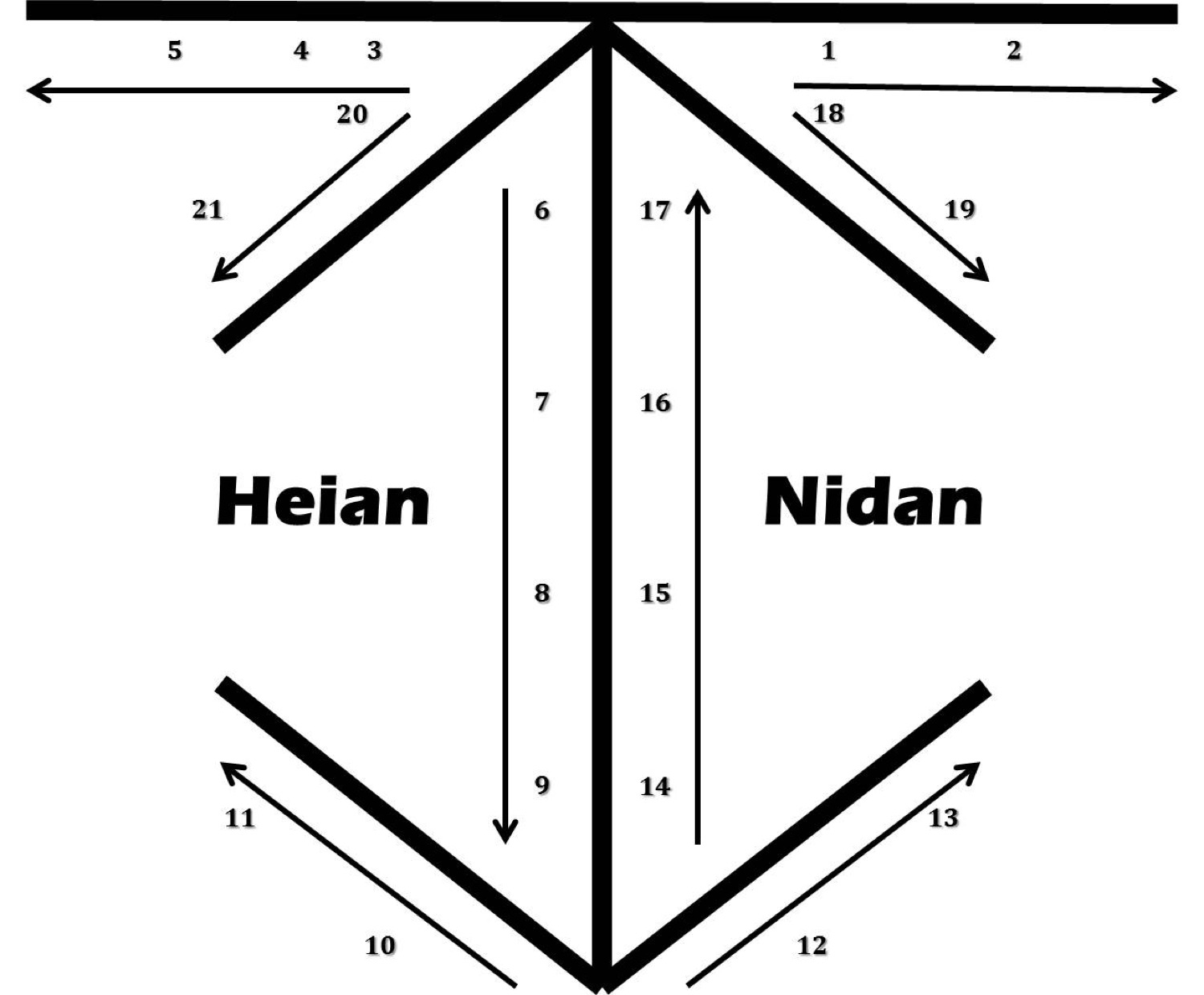
Heian Nidan: the first real classic
The Heian, or Pinan, kata were put together on Okinawa around the beginning of the twentieth century by Anko Itosu, who designed them for teaching karate in schools. Funakoshi renamed them Heian, meaning peaceful mind, when he brought them to mainland Japan, and in Shotokan the order of the first two was swapped, so today's Heian Nidan corresponds to the older Pinan Shodan.
Heian Nidan adds back stance, knife-hand blocks (shuto uke), a side snap kick with a backfist, a front kick and spear-hand strike. It is usually counted as 26 moves. The lines are longer and the turns sharper than in Taikyoku Shodan, so balance and timing get a real test.
How to learn a kata at home
- Learn the floor line first. Walk the pattern with no techniques until the turns are automatic.
- Break it into sections. Three or four moves at a time, then join them.
- Count aloud. Counting fixes the rhythm and shows where you hesitate.
- Film yourself. Compare with your instructor's demonstration and look for high stances and lazy hands.
- Practise bunkai. With a family member, try what each movement could do against a slow, real attack. Understanding makes the kata stick.
Common mistakes
| Mistake | Fix |
|---|---|
| Standing too high | Hold each stance for a slow count of three during practice |
| Looking down | Turn the head first, then the body |
| Rushing transitions | Finish each technique before starting the next |
| Kiai in the wrong place | Mark the kiai points in your notes and say them in rehearsal |
| Flat, powerless technique | Drive from the hips and tense on impact, relax between moves |
Preparing for grading
Examiners look for correct sequence, strong stances, focus and spirit. Run the kata at full speed at least five times in each practice in the last fortnight before a grading, and once slowly to check details. Combine it with the basics and partner drills from the two-week home training plan and you will walk into the dojo ready.
New to karate altogether? Start with our karate for beginners guide.